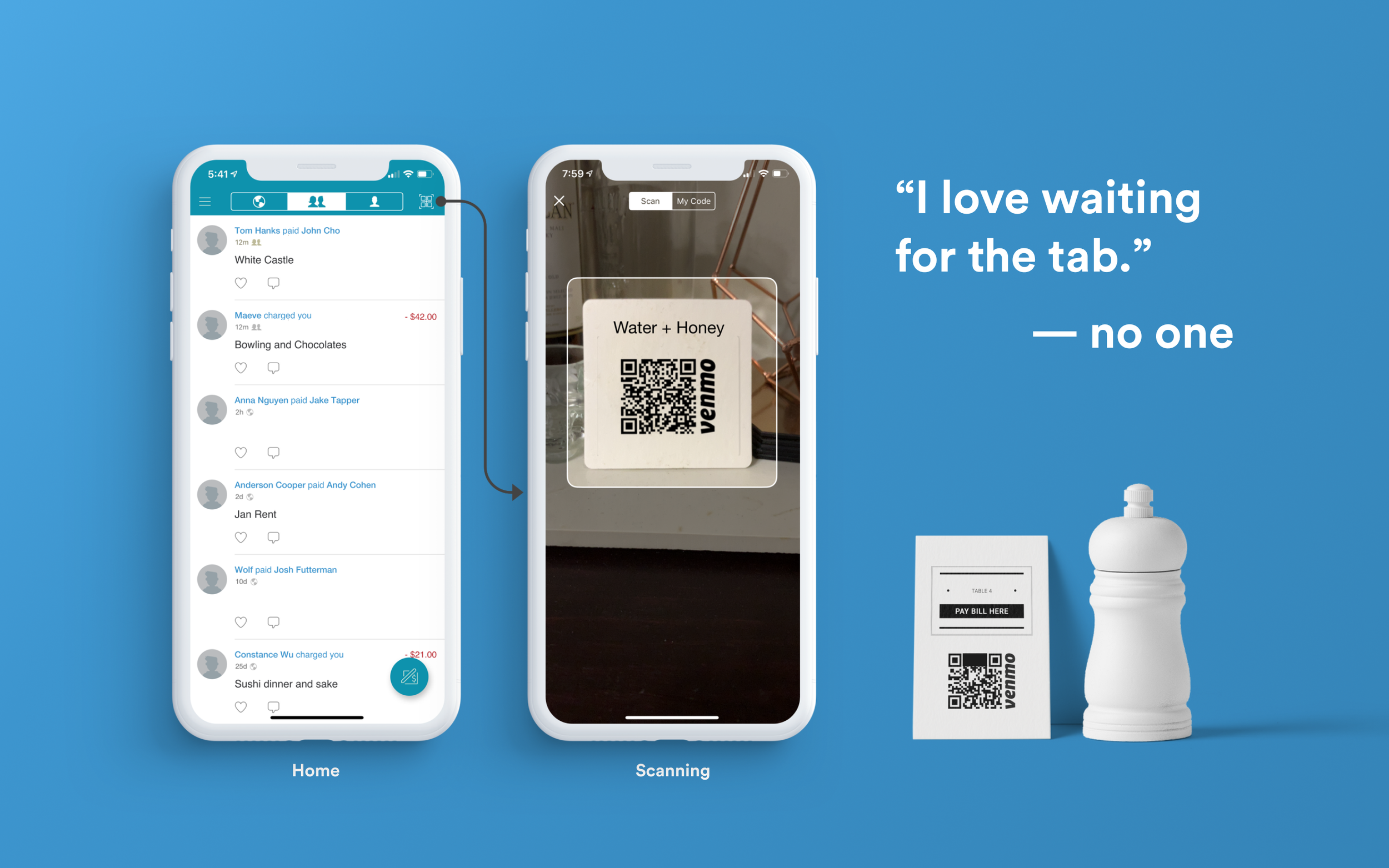
“I enjoy waiting for the tab,”
— no one.
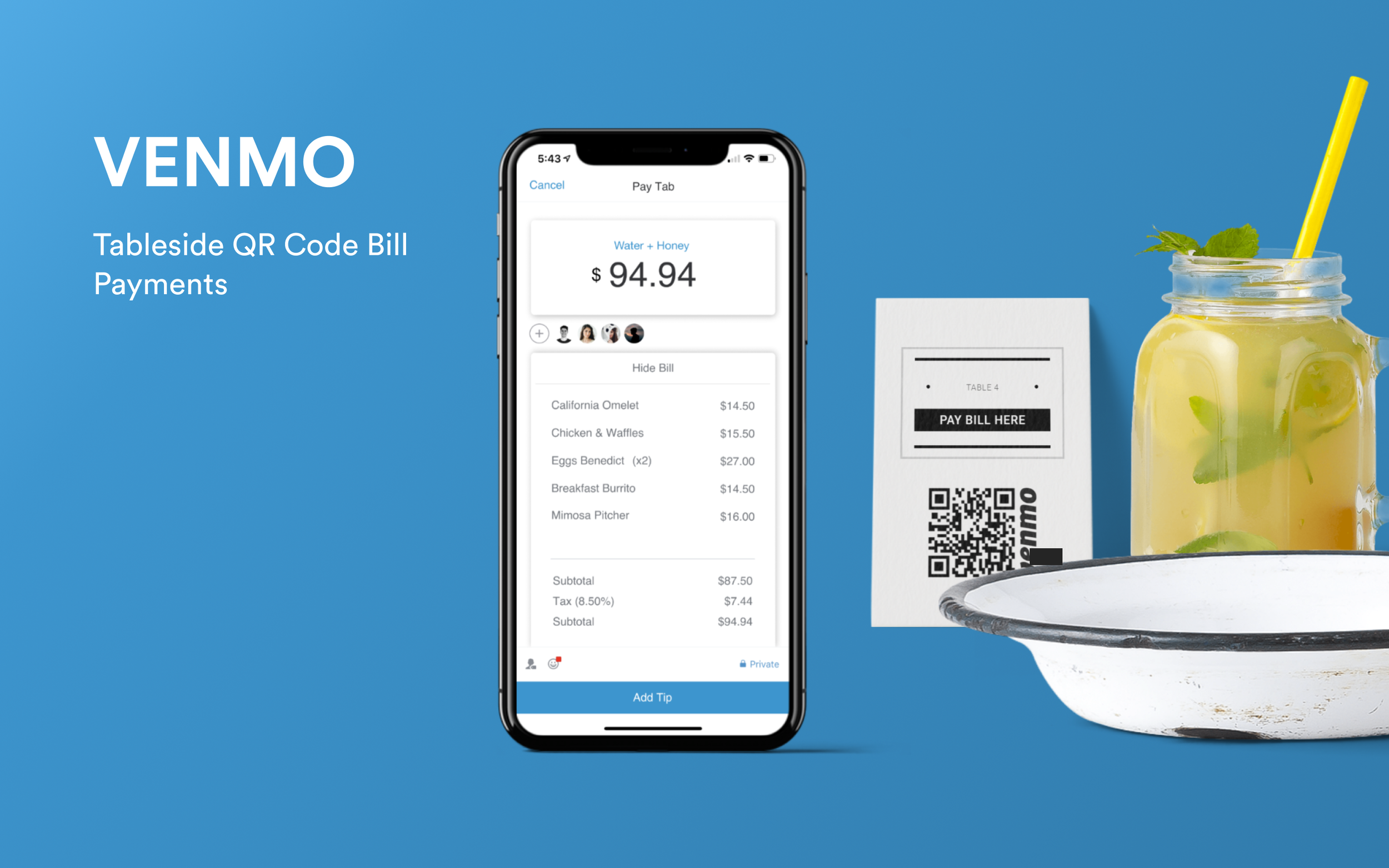
Venmo would like to create a feature that would allow users to easily make payments to establishments such as restaurants, bars, etc. Establishments accepting Venmo payments would provide QR codes for customers to easily and quickly pay for bills without needing to ask for a bill from anyone. This would include providing a digital receipt and a means to input tip amounts.
Note: This is a speculative project.
Scope
Create a simple user flow to make payments at dining establishments.
Embed well and smoothly with the rest of the Venmo app.
Role
Product Thinking, Research, Product Design
Discovery
Market Research
Younger generations, such as millennials and generation Zers, are all about instant gratification. They have grown up in an on-demand society with almost anything at our fingertips. So why should paying for a bill be any different? Venmo is in the business of making payments ‘more fun and less awkward’. Many restaurant goers have run into the problem of looking for their waiter/waitress’ attention to simply request for the check.
Gen Z consumers are becoming the payments industry’s future customer base. They are projected to make up 40% of all US consumers by 2020. These GenZers are gravitating to mobile banking apps with 69% using them daily or weekly.
Given the above, Venmo would like to improve the dining experience by streamlining the process of requesting and paying for a bill. Venmo proposes that this be done with the use of QR codes. Users can use the new feature to make payments to establishments by scanning Venmo QR codes. Dining establishments will offer QR codes tableside or by other means. This would allow users to scan and send instant payments to the establishment. An overwhelming 95% of restaurant owners agree that technology improves restaurant efficiency. 73% of restaurant-goers say technology improves the dining experience. The new feature will also promote more efficient table turnover resulting in higher revenue especially at peak hours.
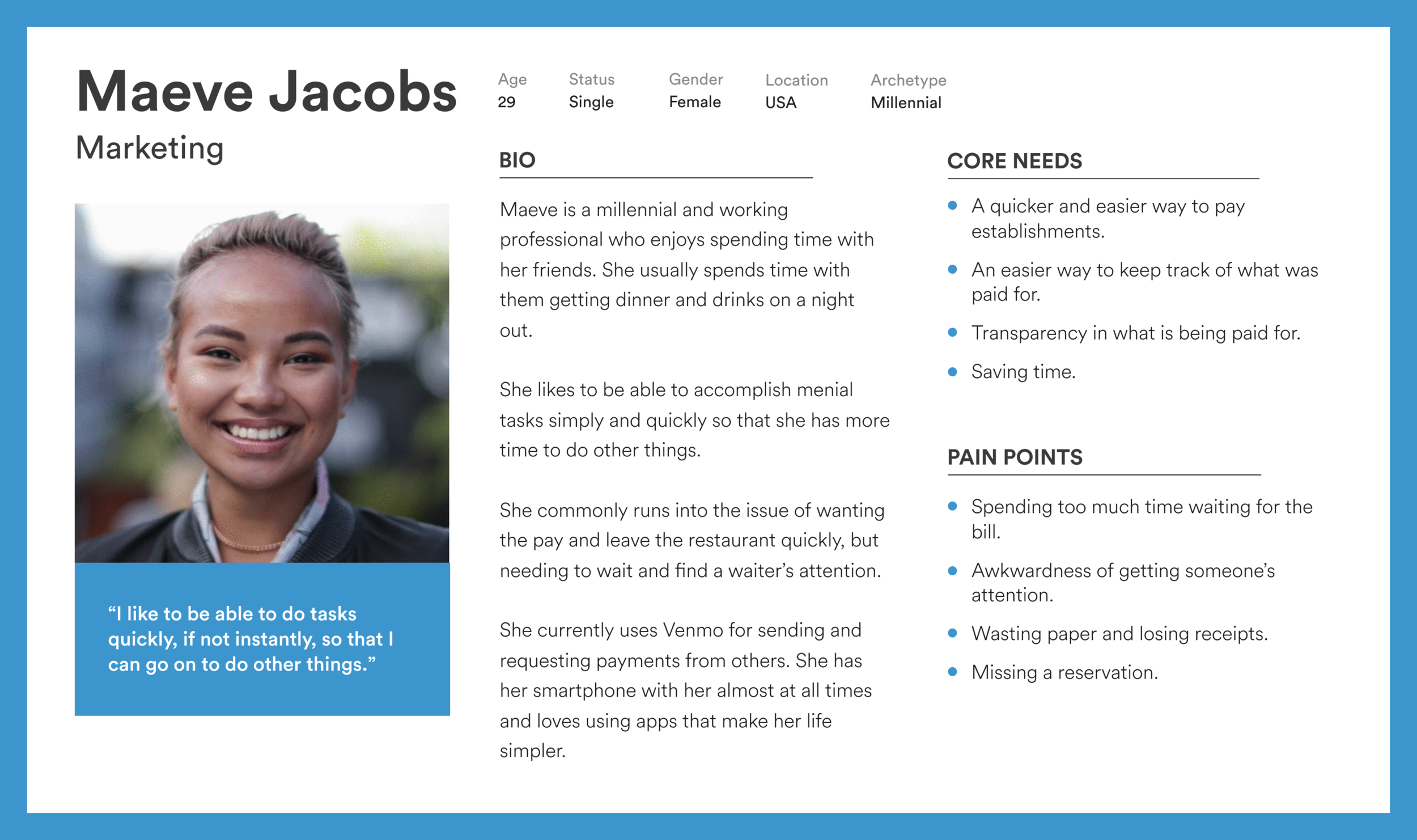
Hey Maeve, what do you need?
Venmo’s current user base skews towards millennials. As we look towards the future, we prepare for the Gen-Z users who are gravitating towards mobile banking apps. Both their needs stem from instant gratification and seamless experiences. Here we have Maeve who represents our current target audience, millennials.
Ideation
Sketches
Using divergent thinking, I begin ideating iterations of screens needed for Maeve to accomplish her tasks described in the user scenarios. This is done with pen and paper using blank cards. Using a modular card system allows me to visualize the user flow and modify it as needed. I can switch cards to see how different screen iterations may work within the flow. I am also able to see where I may be able to remove a step to simplify a task.
Wireflows
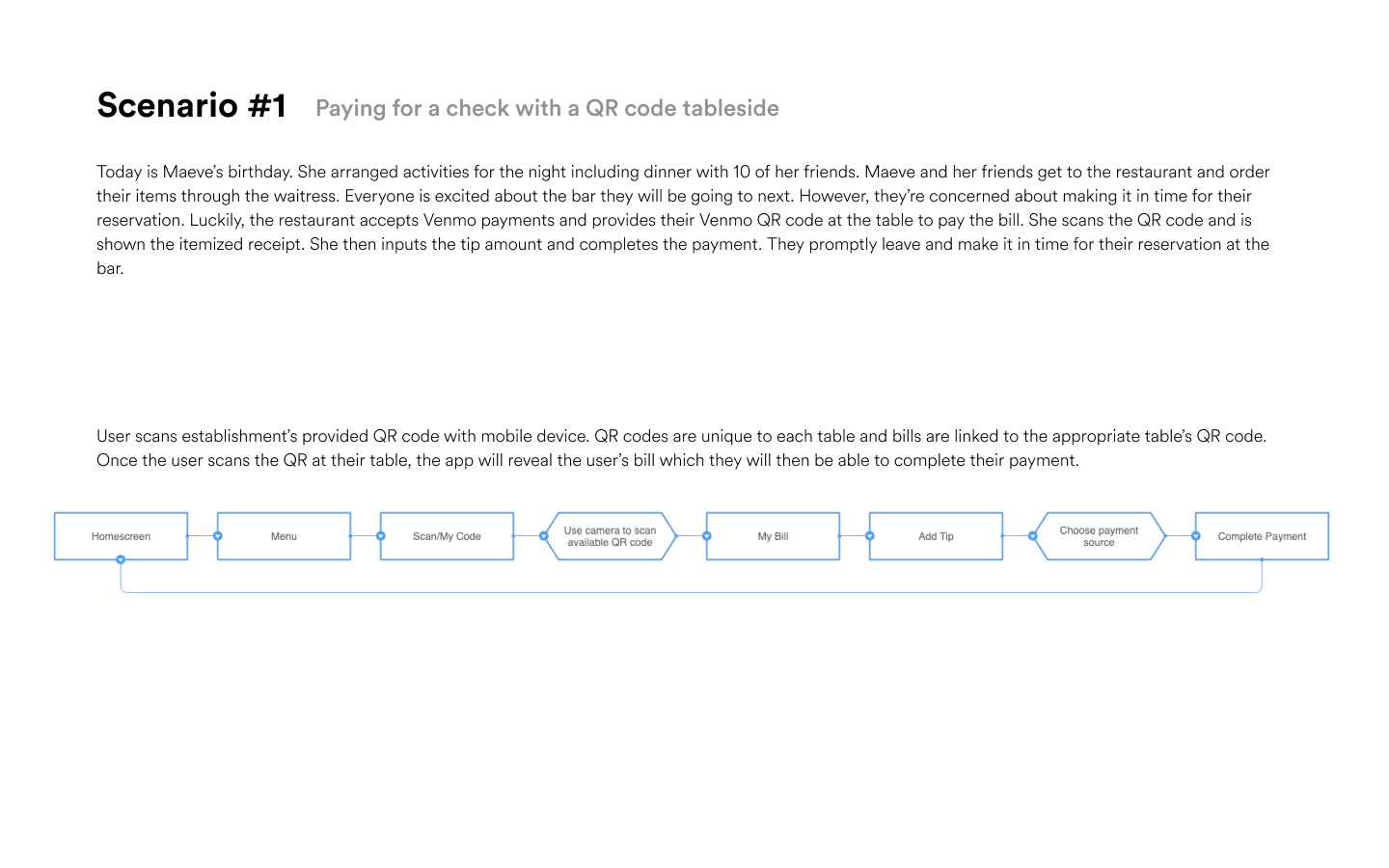
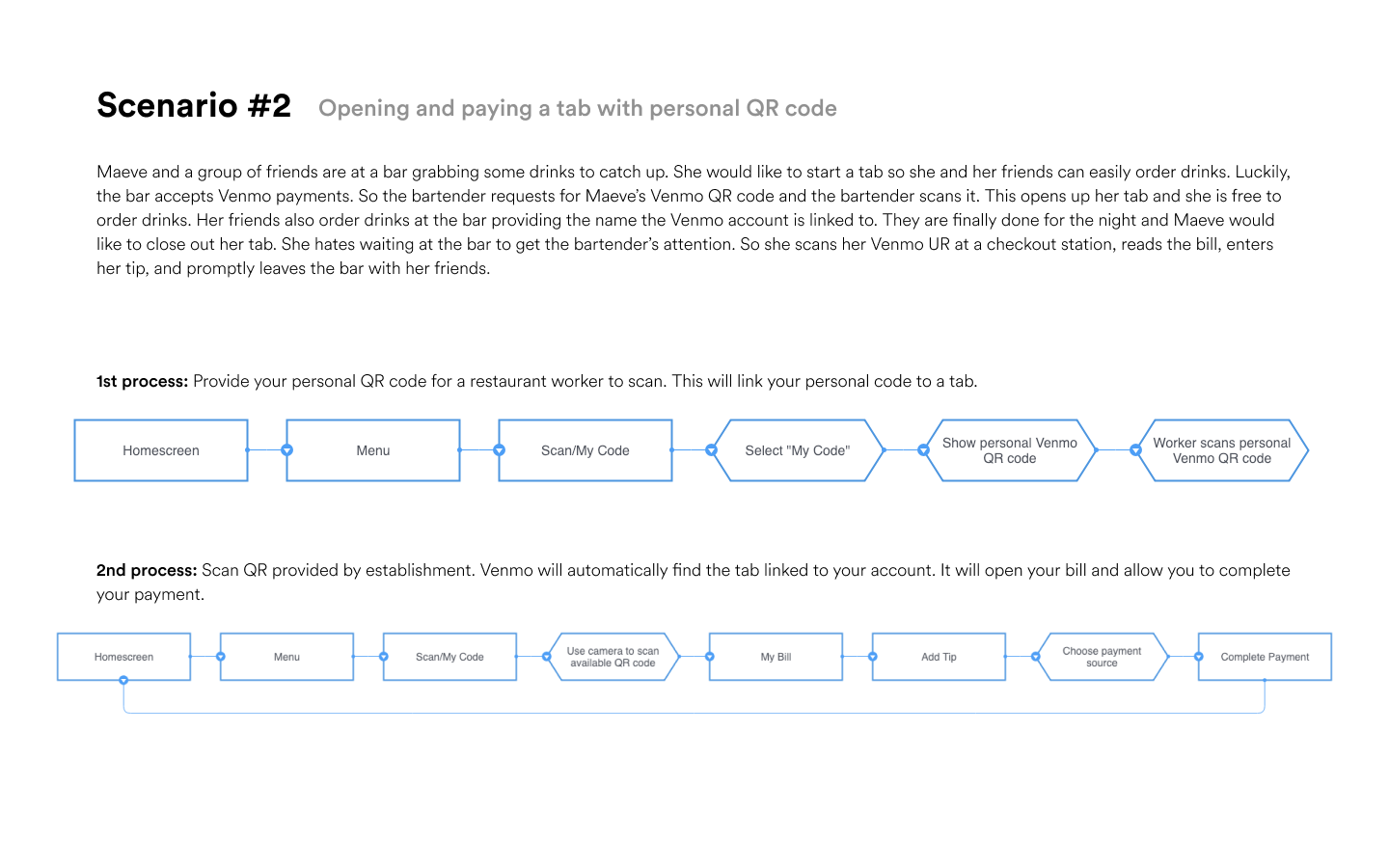
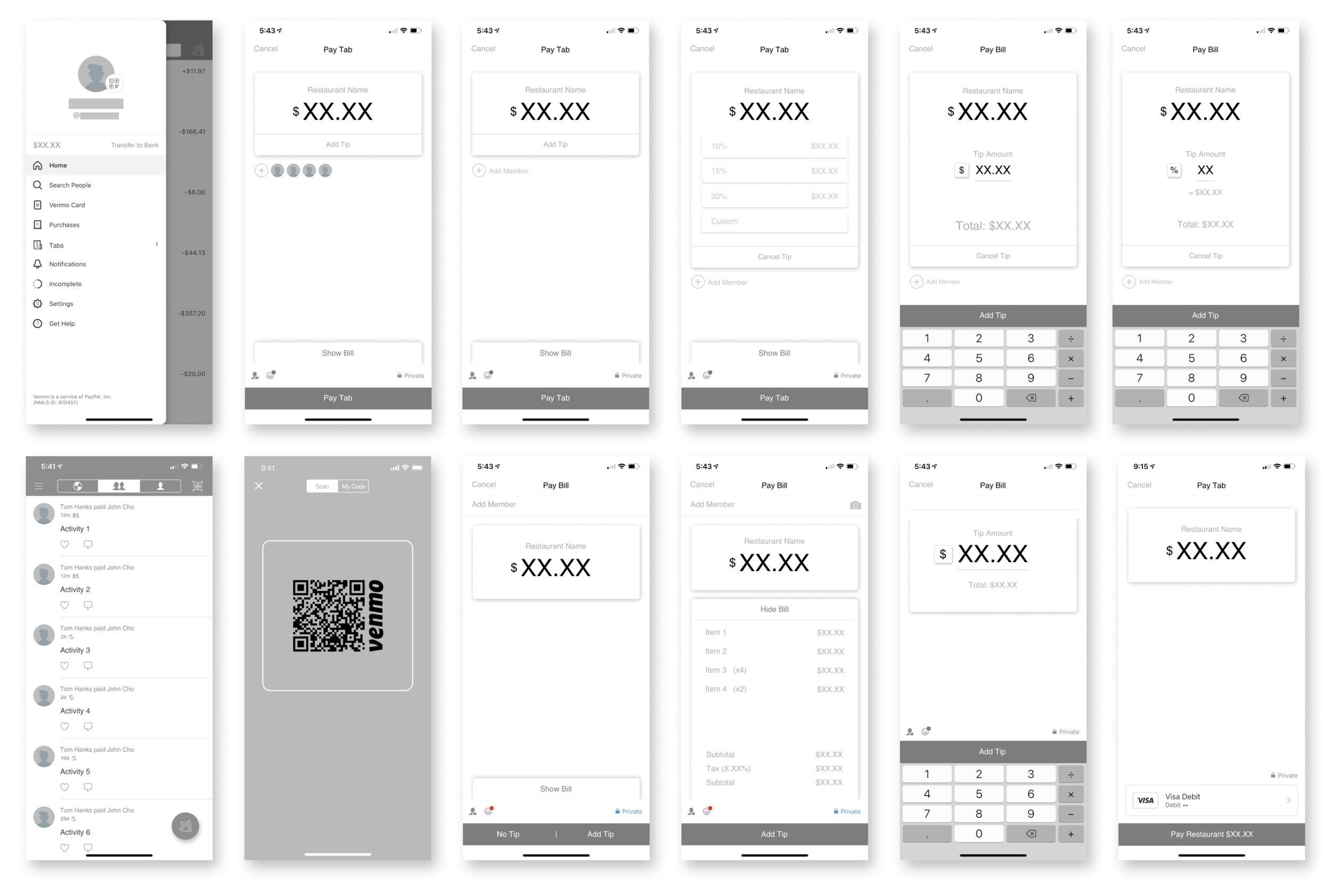
Using the low-fidelity wireframes, wire flows are created in Overflow. Wire flows help better to communicate interaction design and user workflows. These help in visualizing how the user may interact with the app to accomplish the tasks described in the user scenarios.
I choose to do wire flows instead of user flows as they help me better visualize the intentionality of how a user might move through the app. Any flaws within the flow will become much more evident by viewing how each screen will interact with the next.
User Scenario
Bridging research and design are user scenarios. I create a narrative of how the feature is being used with Maeve as the main character. This includes her motivations, needs, and frustrations leading towards the use of this feature. The scenarios help shape design solutions to be further crafted in the following steps.
Design
Mid-Fidelity Wireframes
Narrowing down my design direction with the sketches I begin with the low-fidelity wireframes. I create these wireframes using Figma. Iteration continues during this process as I build out each screen and get a better understanding of space. Extra care is taken in placing every element with intention.
Final Design
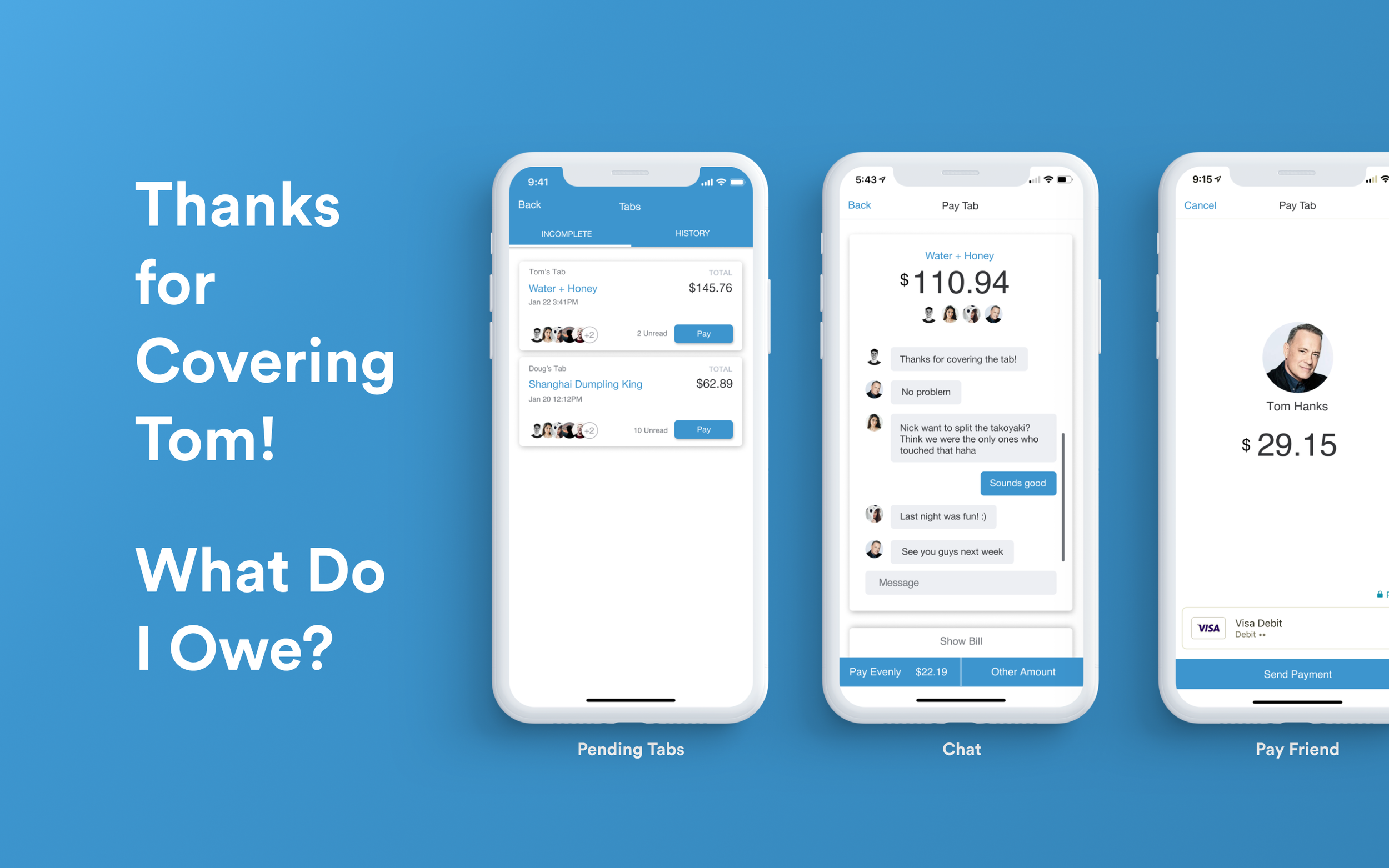
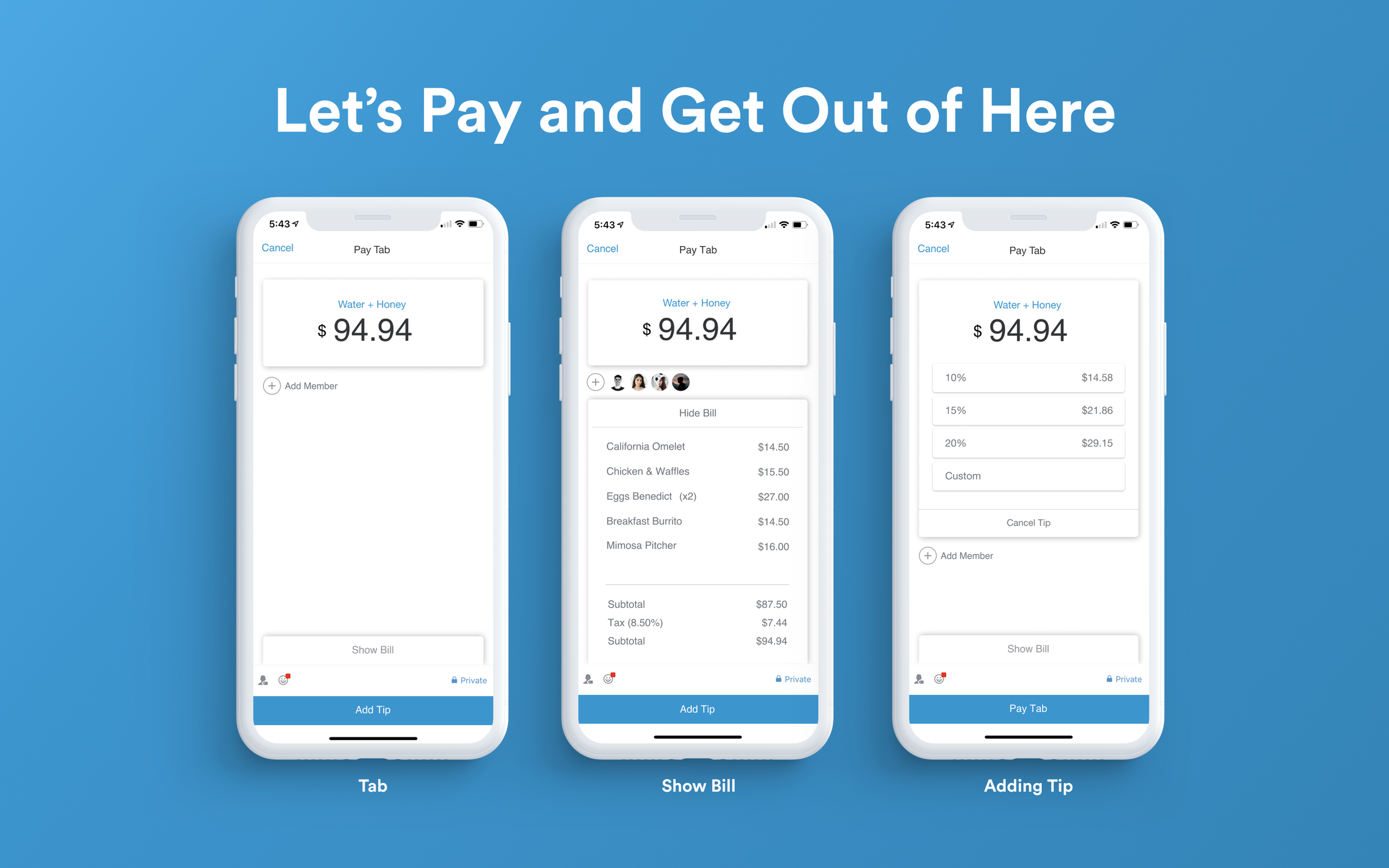
Next Steps
If time permitted, there are aspects of this feature that could be expanded on. For instance:
Recipient paying a custom amount for a tab by selecting individual items.
Splitting tax and tip fairly by calculating individual amounts owed.
Creating the interface on the establishment’s side.
How might a restaurant add items to a tab.
How might bars open a tab on their end.
How might a dispute about an item on the tab be solved.
Lessons Learned
Product Thinking
Providing research-based reasoning for the value proposition of a feature.
Creating user scenarios help solidify the needs of the user and how to approach those needs with the right solutions.
Design Process
Design is continuously iterative.
Begin designing through divergent thinking, solutionizing without limitations. After which using convergent thinking to chip away solutions into a focused solution that will accomplish established tasks
Everything must be done with intention. Same as when painting a picture, every stroke was done purposefully and intentionally to create the final painting.