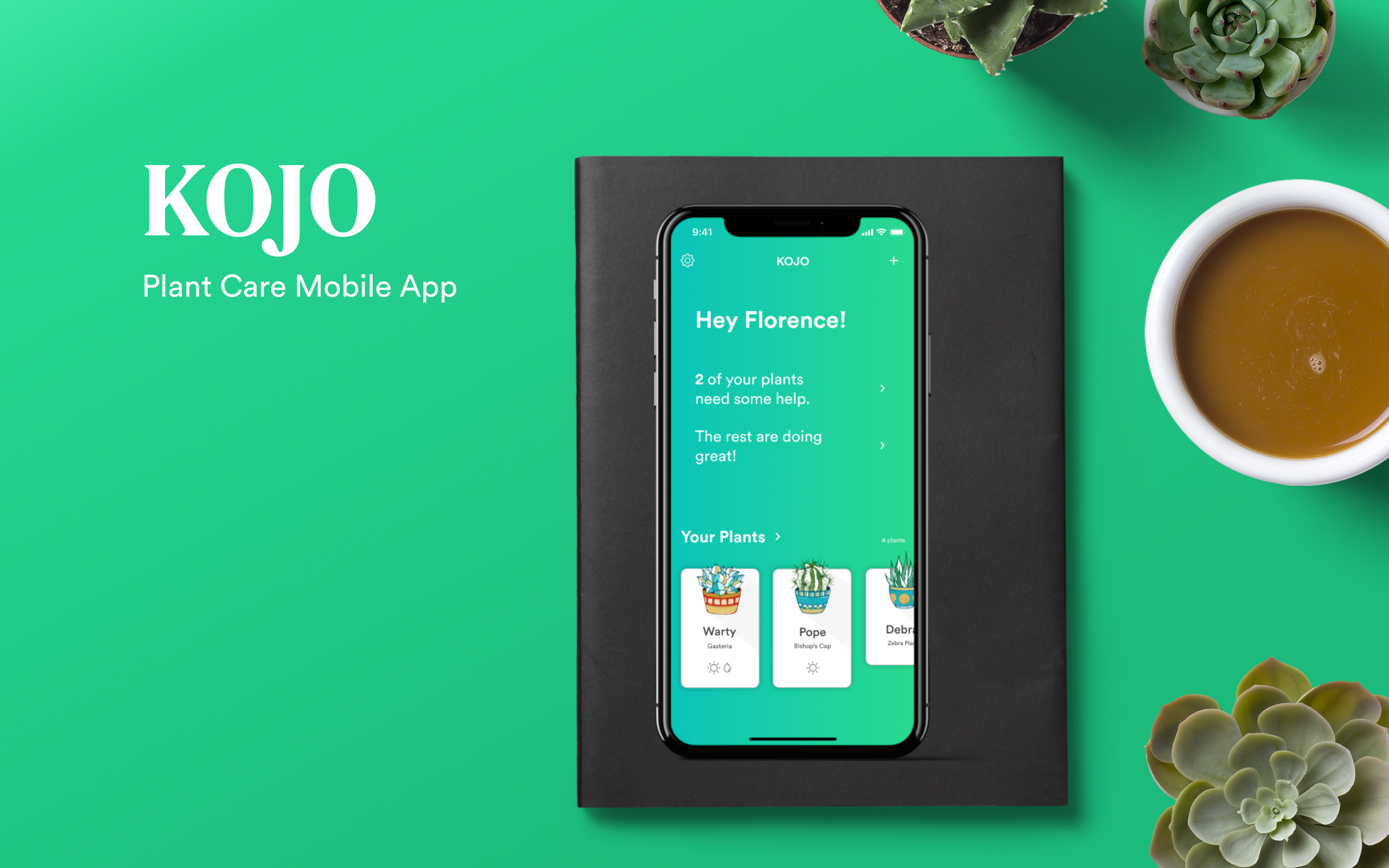
Thrive baby, Thrive!
Venmo would like to create a feature that would allow users to easily make payments to establishments such as restaurants, bars, etc. Establishments accepting Venmo payments would provide QR codes for customers to easily and quickly pay for bills without needing to ask for a bill from anyone. This would include providing a digital receipt and a means to input tip amounts.
Note: This is a speculative project.
Scope
Complete mobile app
Competitive analysis
User research.
Low and High fidelity wireframes
Prototype
Branding
Role
UX Research, Product Strategy, UX/UI Design
Discovery
Research Goals
Gain an understanding of the current plant care monitoring market space.
Gain empathic understanding of plant owners’ needs and frustrations regarding plant care.
Gain insights through qualitative and quantitative studies to help with solutionizing.
Competitive Analysis
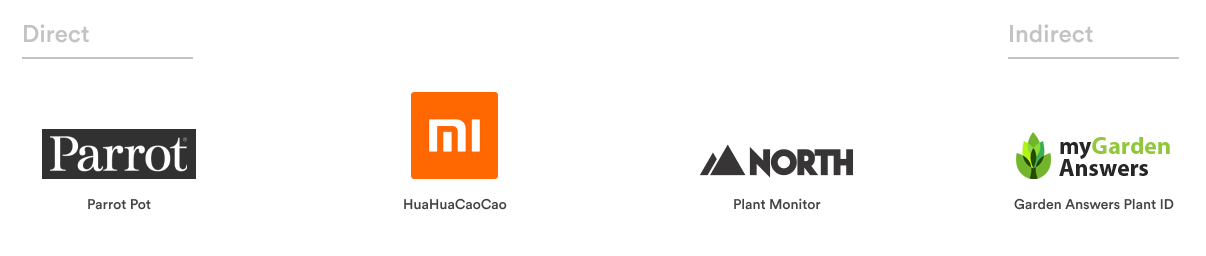
A competitive analysis was done focusing on companies which offer IoT devices for plant care with accompanying mobile apps. I gather insights from the research as to how Kojo may be able to position themselves apart from the competition.
Market Research
Background research was done to understand why the plant care mobile app is needed within today’s climate. I have gained insights from articles and statistical data regarding houseplants and their care. This reveals the relevance of the ownership of houseplants and a broad understanding of the needs and issues tied to indoor gardening.
User Interviews
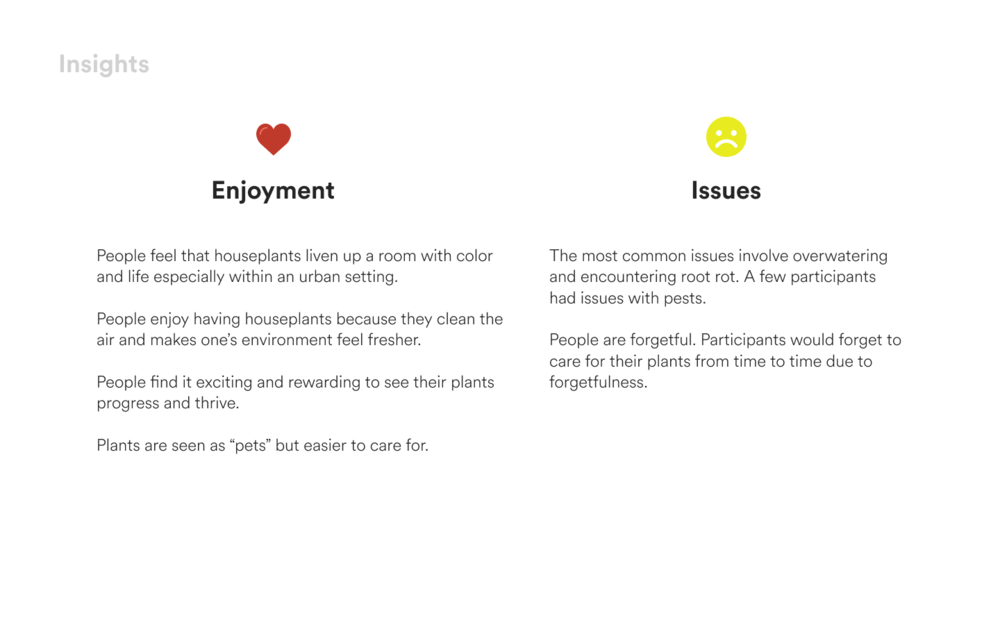
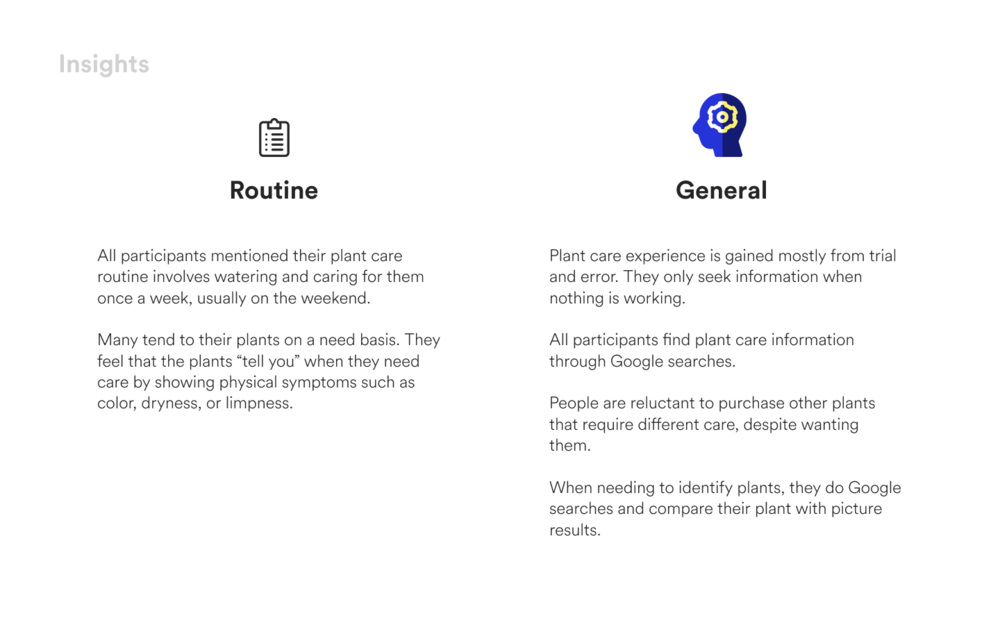
Meet Florence
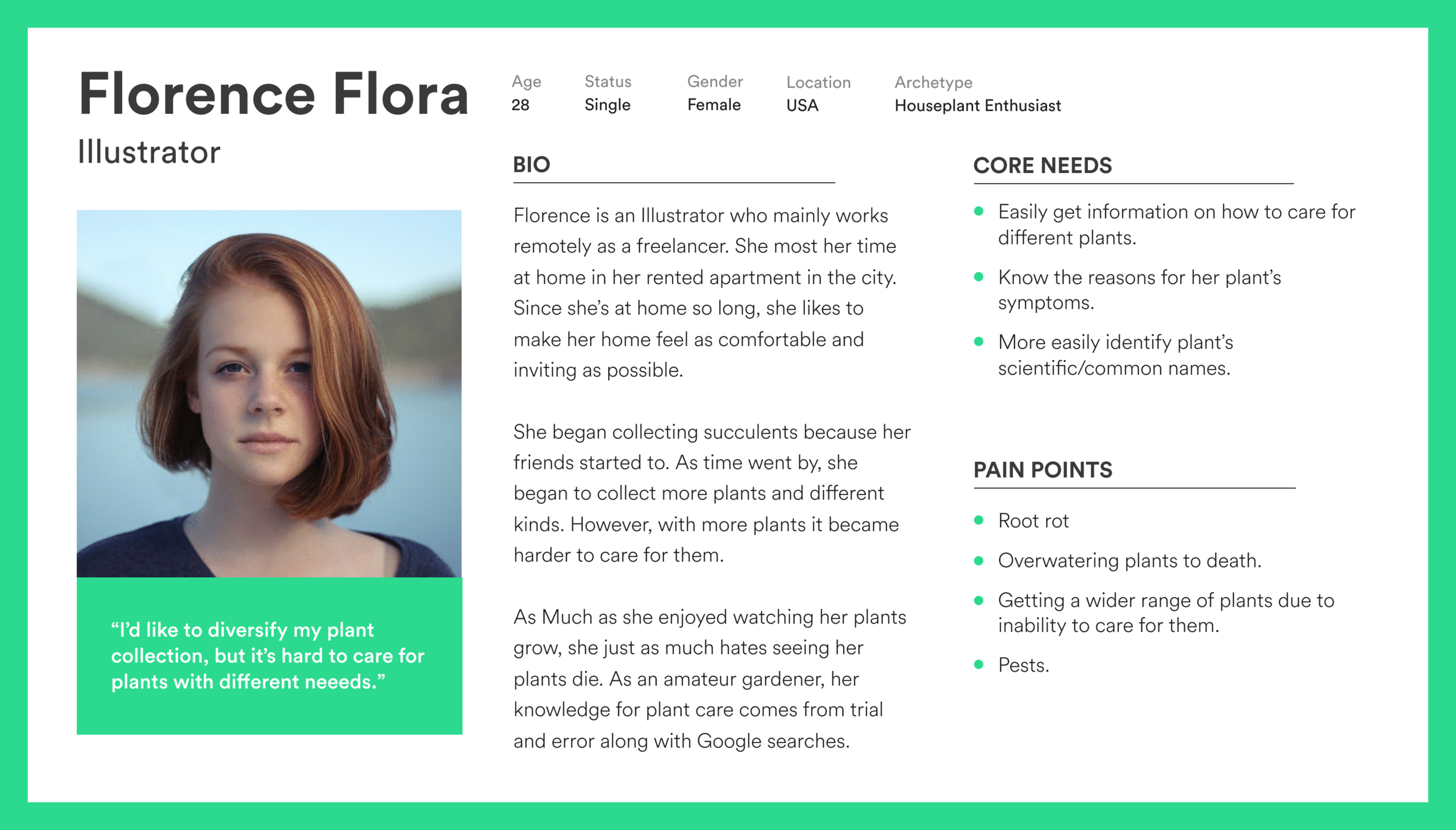
Using the insights from the interviews, I created Florence Flora. Using Mural, I broke down Florences’s persona into motivations, context, goals/needs, and frustrations/fears.
Her main needs were to understand exactly what her plants need to thrive. She wishes to have a more custom approach to the needs of each individual plant. This would enable Florence to purchase more varied plants needing different plant care. Her fears include overwatering plants which may result in root rot.
Ideation
Sketches
I began with notepad sketches brainstorming different approaches to screens based on the user scenarios set beforehand. After sketching different examples of each page, I would take elements I believed to work and converge them into a final sketch.
User Scenario / User Flows
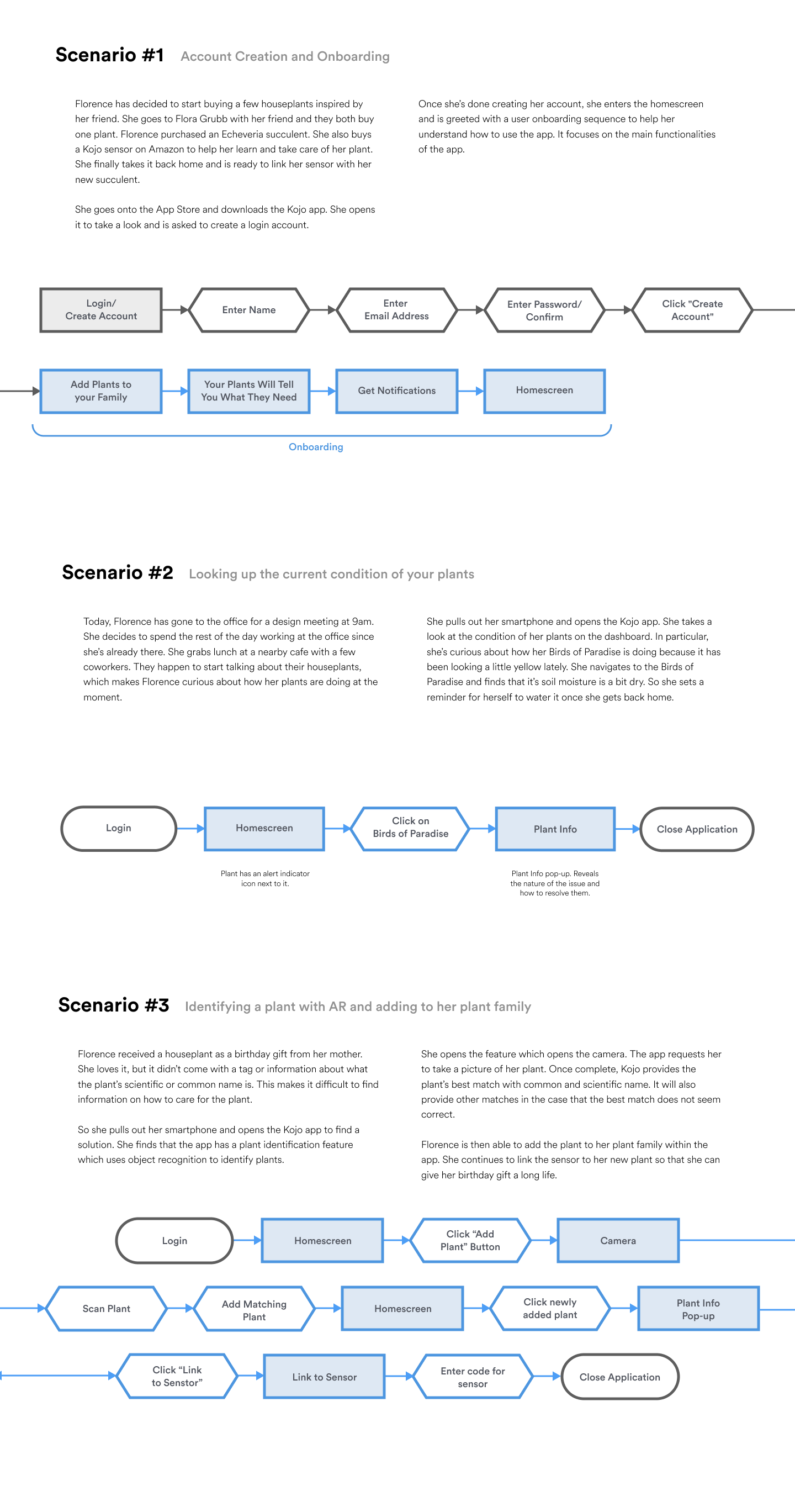
Bridging research and design are user scenarios. I created a narrative of how Florence would use the Kojo app. This includes her settings, motivations, needs, and frustrations leading to the use of the app. The scenarios help shape design solutions to be further crafted in the following steps.
Design
Mid-Fidelity Wireframes
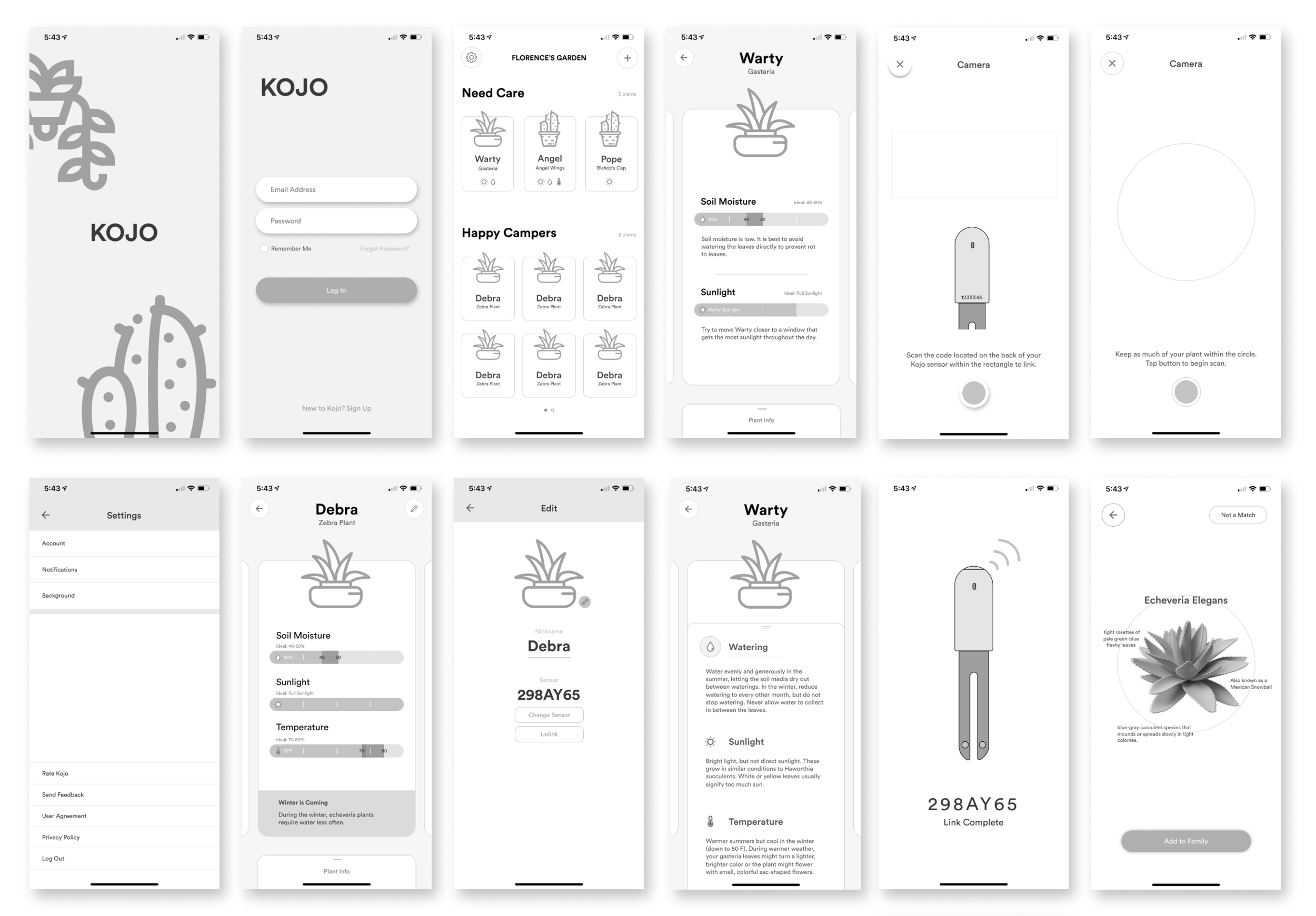
After narrowing the sketches down to one design, I moved on to create a mid-fidelity mobile wireframe. These were created in Figma.
Final Design
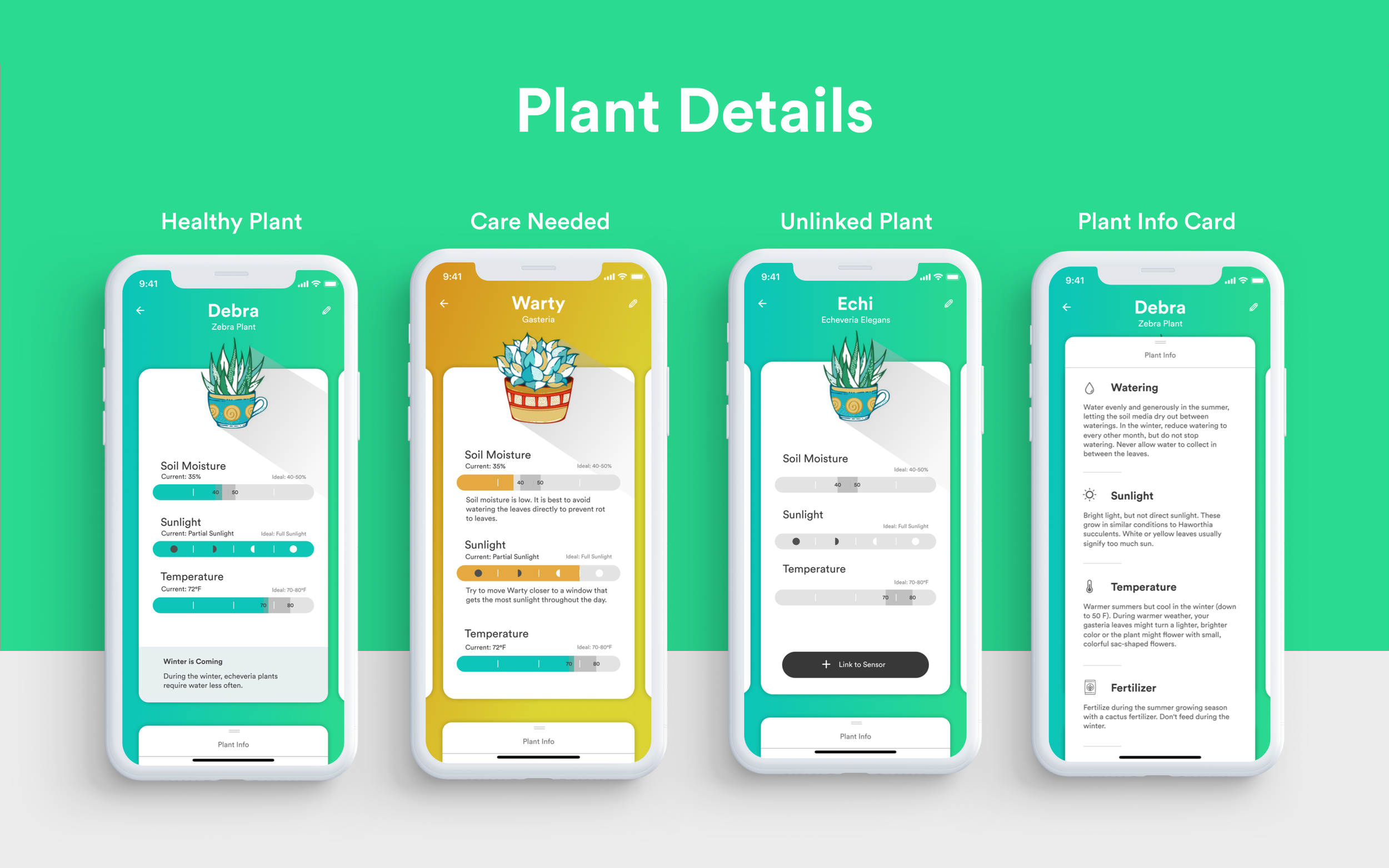
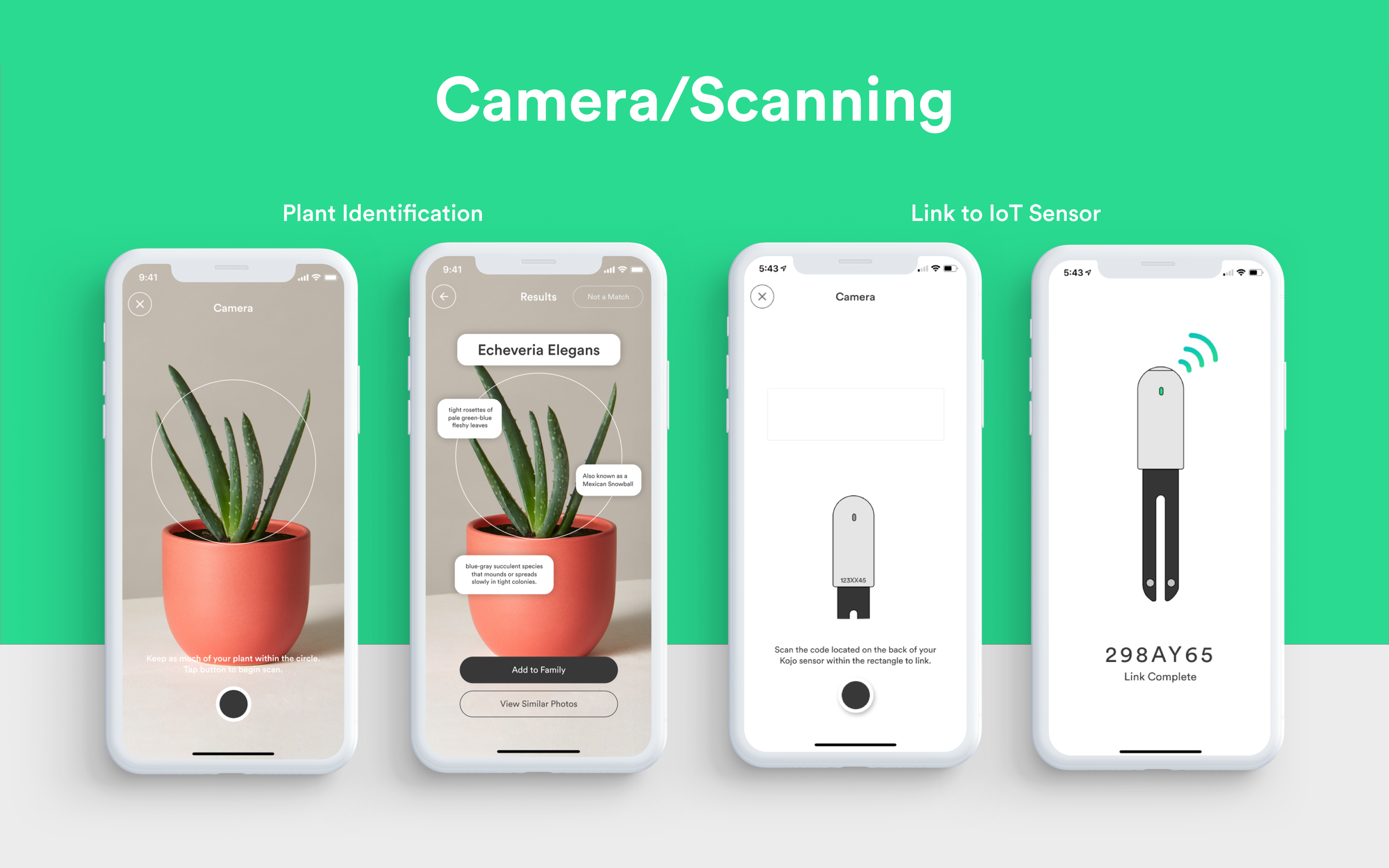
Next Steps
If time permitted, features that could be added could be:
Setting reminders to routine plant care.
Adding a social aspect to share the progress of their plants.
Lessons Learned
Challenges
Tackling end-to-end design of a new application for the first time.
Deciding on branding direction.
Research
Competitive analysis allows one to see what others are attempting to accomplish. This can also reveal what can be improved on and to take that on as challenges to include that within your own product.
Design Process
Don’t be afraid of gathering inspiration from other designers. The goal is not to copy but to mold the idea into something better that works better for your app.
A product is never done and there are always things that could be improved upon. But it is important to know when to stop and deliver. Tackle improvements one at a time afterward.